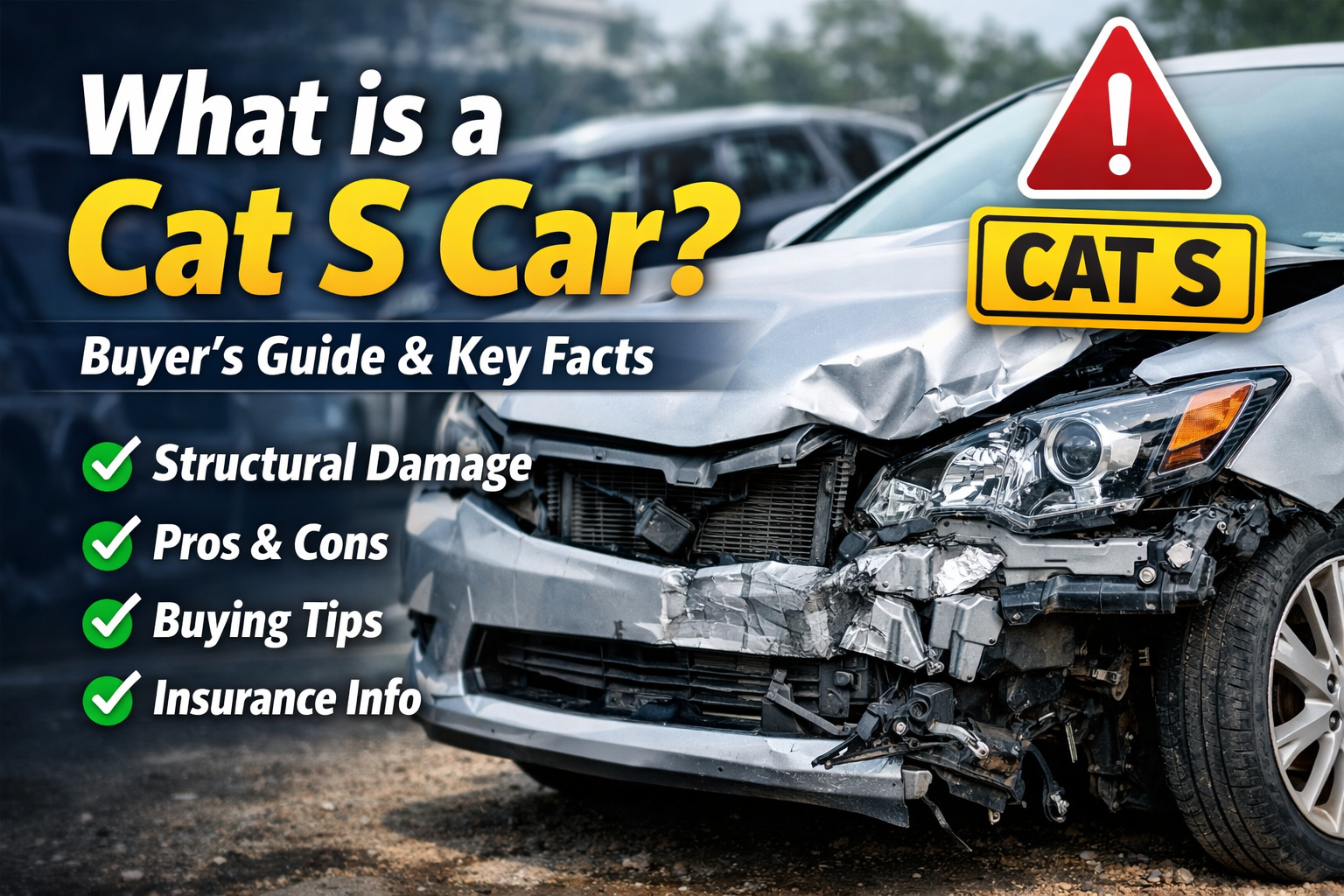
What is Cat S
You’ve spotted a used What is Cat S at a price that seems almost too good to be true. Look closer and you’ll find two letters in the listing that explain everything: Cat S. Before you click away — or worse, buy without knowing what that label means — read this guide first.
What Is a Cat S Car? The Simple Definition
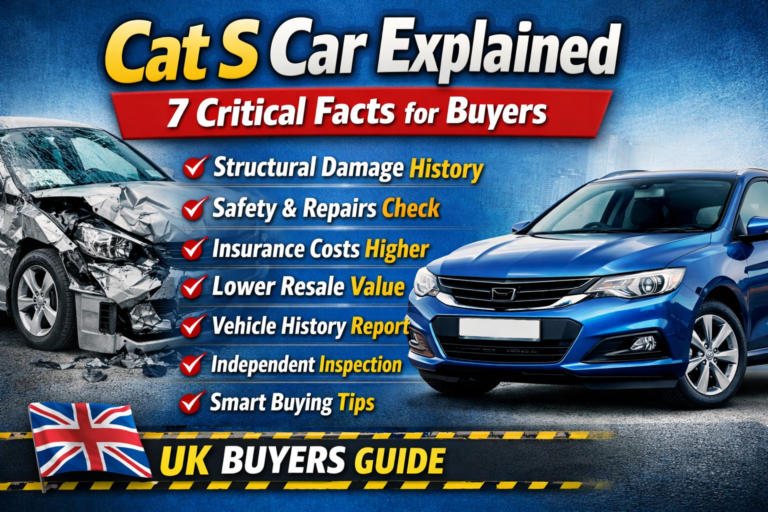
What is Cat S — short for Category S — is a vehicle that has been written off by an insurance company because it suffered structural damage in an accident. The “S” literally stands for Structural.
Here’s the key distinction that trips most buyers up: What is Cat S write-off does not mean the car is a total loss or permanently unsafe. It means the vehicle’s structural components were damaged to the point where the insurance company decided repair costs exceeded what they were willing to pay — but the car can legally be repaired and driven again.
What is Cat S Category Write-Off
What is Cat S vehicle classified as Cat S has sustained damage to its structural frame or chassis. While the insurer has declared it uneconomical to repair under the policy, the vehicle is legally repairable and can be returned to UK roads after professional work and re-registration — unlike Cat A or Cat B vehicles, which must be destroyed.
The structural parts most commonly affected in What is Cat S incident include the chassis frame, crumple zones, A/B/C pillars, sill sections, floor pan, and front or rear sub frames. These aren’t cosmetic — they’re the load-bearing skeleton that keeps the car’s occupants safe in a collision. That’s why Cat S carries more weight than a standard cosmetic write-off.
UK Insurance Write-Off Categories Explained
The UK uses a four-tier write-off system managed by the Association of British Insurers (ABI). Understanding where Cat S sits in this hierarchy is crucial before making any used-car decision.
| Category | Damage Type | Can It Be Repaired? | Can It Return to Road? | Risk Level |
| Cat A | Severe — total crush, fire, or flood | No | No — must be scrapped entirely | Highest |
| Cat B | Major — body shell destroyed | Parts only | No — body shell must be crushed | Very High |
| Cat S | Structural damage to chassis or frame | Yes — professional repair required | Yes — after re-registration | Medium |
| Cat N | Non-structural — cosmetic, electrical, trim | Yes — often straightforward | Yes — no re-registration needed | Lower |
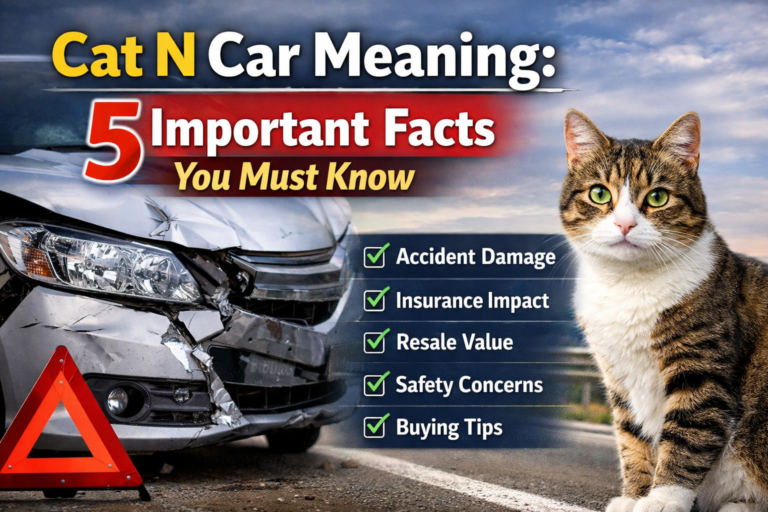
What is Cat S sits — it’s the more serious of the two repairable categories. Cat N cars suffer only cosmetic or electrical damage, whereas Cat S vehicles have had their actual structural integrity compromised. That difference matters enormously to safety, repairability, and resale value.
The old pre-2017 write-off system used categories C and D. Cat S replaced the old Category C, and Cat N replaced Category D. If you’re looking at older vehicle history reports, bear that in mind.
What is Cat S Structural Damage Actually Means
When people hear “structural damage,” they sometimes picture a car folded in half. In reality, structural damage on a Cat S vehicle can range from a relatively minor chassis deformation after a shunt to a significantly bent A-pillar from a side impact. The common thread is that a load-bearing component of the car’s frame or shell has been compromised.
Parts Most Commonly Damaged in Cat S Vehicles
A professional body shop uses jig measurement systems to assess chassis deformation, often measuring to within fractions of a millimetre. If the frame can be pulled back into alignment and the structural integrity restored, the repair is feasible. The problem is that verifying whether the repair was actually done correctly is near impossible without specialist equipment — which is why independent pre-purchase inspections matter so much.
Why Insurers Write Vehicles Off as Cat S
Insurance companies don’t write vehicles off as What is Cat S purely because they’re unsafe — they write them off because the repair cost exceeds an economical threshold relative to the car’s market value. In practical terms, if your car is worth £8,000 and the body shop quotes £6,500 to repair the chassis damage, the insurer may decide it’s cheaper to write it off, pay out your settlement, and sell the car to a salvage auction. The car itself may still be perfectly fixable — it’s purely a financial decision.
How a Vehicle Gets Classified as Cat S
The process follows a clear sequence once you’re involved in a significant accident and make an insurance claim.
- Accident is reported to the insurer
You report the collision; the insurer opens a claim and sends an assessor to evaluate the damage. - Engineer inspection takes place
A qualified vehicle engineer or approved assessor physically examines the car, checks structural damage, and produces a repair estimate. - Cost vs. value decision is made
The insurer compares estimated repair costs against the vehicle’s pre-accident market value. If repairs are deemed uneconomical, the car is declared a write-off. - Write-off category is assigned
Based on damage severity, the car is categorised as A, B, S, or N. Structural damage with repair potential = Cat S. - Record is added to national databases
The write-off is registered with the DVLA and logged on databases like HPI, which buyers can check before purchase. - Car is sold at salvage auction
The insurer typically sells the vehicle on. A specialist repairer or trader buys it, repairs it, and lists it for sale — often at a significant discount.
What is Cat S and how markers stay on the vehicle’s history permanently, even after a flawless repair. It cannot be removed or expunged. This is both a buyer protection and a source of lasting depreciation.
Hidden Risks of Buying a Cat S Car
Let’s be direct about this. What is Cat S car can be a smart buy — but only if you go in with eyes open. Here are the real risks buyers frequently underestimate.
Substandard Repairs
Not every body shop does Cat S work to a professional standard. A badly repaired chassis can be genuinely dangerous in a subsequent crash, as crumple zones may not perform as designed.
Hidden Secondary Damage
Structural impacts often cause damage beyond what’s visible. Misaligned subframes, hidden floor pan cracks, and stressed wiring looms may only appear months after purchase.
Higher Insurance Premiums
Some insurers charge significantly more to cover a Cat S vehicle. Others may refuse cover altogether, limiting your choice of providers and potentially pushing costs up.
Permanent Depreciation
The Cat S marker never leaves the car’s record. When you come to sell, buyers will know — and they’ll offer less. Expect resale values to remain suppressed indefinitely.
Finance Difficulties
Some lenders will not provide car finance on Cat S vehicles. If you plan to sell via part-exchange to a main dealer, many will refuse Cat S cars outright or offer very low valuations.
MOT & Ongoing Issues
What is Cat S car repair wasn’t thorough, underlying structural issues can cause ongoing MOT failures, premature tyre wear from misalignment, or persistent handling problems.
Gaps in Documentation
Sellers don’t always volunteer the repair history. If receipts, photos, and engineer sign-offs are missing, you’re taking someone’s word that the structural work was done properly.
Legal & Compliant When Done Right
On the flip side — a properly repaired, MOT-tested Cat S car with full documentation is entirely legal, roadworthy, and can give excellent value for money.
Advantages vs. Disadvantages: The Honest Picture
|
Pros
|
Cons
|
|---|---|
Can You Legally Drive a Cat S Car in the UK?
Yes — but there are non-negotiable requirements you must meet before the car is legal on UK roads.
Full professional repair must be completed
All structural damage must be repaired to an acceptable standard by a qualified body shop. Amateur or incomplete repairs are not sufficient.
Vehicle must pass an MOT
After repairs, the car needs a current MOT certificate confirming it meets road safety standards. Without this, it cannot legally be driven.
Re-registration with the DVLA may be required
Depending on the extent of repair, a new logbook (V5C) may need to be issued. Check with the DVLA’s vehicle registration guidance for current requirements.
Valid insurance must be in place
The vehicle must be insured to UK legal standards before being driven. Inform your insurer of the Cat S status upfront — failure to disclose can invalidate your policy.
One important point: always disclose What is Cat S status to your insurer. If you fail to mention it and your insurer later discovers it during a claim, they have grounds to deny your claim entirely — leaving you personally liable. This isn’t a risk worth taking.
What is Cat S Car insuring: What You Need to Know
What is Cat S vehicle insuring is possible, but the landscape is more complicated than insuring a standard car. Here’s what to expect.
Will Insurers Cover a Cat S Car?
Most mainstream insurers will cover What is Cat S vehicles, but not all. Some specialist insurers cater specifically to write-off categories and may offer better terms. The key factors insurers look at include the quality of the repair documentation, who carried out the work, and whether the vehicle passed its MOT post-repair.
For tailored advice on What is Cat S policies, comparing quotes through a specialist broker is usually more effective than going direct to a mainstream comparison site. You can also explore specialist car insurance options that cover non-standard vehicles.
Will My Premium Be Higher?
Almost certainly, yes — though the exact increase varies by insurer. Some companies add a modest surcharge; others apply significant loading to the premium. It’s worth getting multiple quotes before committing to a Cat S purchase so you can factor the annual insurance cost into your overall budget.
Disclosure Is Non-Negotiable
UK insurance law requires you to disclose all material facts to your insurer. A vehicle’s write-off history is a material fact. Failing to disclose What is Cat S status is considered non-disclosure and can void your policy at exactly the moment you need it most.
Cat S vs Cat N: Which Is the Better Buy?
If you’re comparing both categories as used-car options, here’s a clear breakdown of the differences that matter most to buyers.
| Factor | Cat S | Cat N |
| Damage Type | Structural (chassis, pillars, subframe) | Non-structural (cosmetic, electrical, trim) |
| Safety Risk | Higher if repairs are substandard | Lower — structure is intact |
| Repair Complexity | Specialist body shop required | Often manageable by competent mechanic |
| Typical Price Discount | 20–40% below market | 10–25% below market |
| Resale Value | Significantly suppressed | Moderately suppressed |
| Insurance Cost | Higher loading likely | Moderate loading |
| Re-registration Required | Sometimes yes | No |
| Best For | Buyers with expert inspection access | Most budget-conscious buyers |
In general, a well-documented Cat N car offers a slightly safer used-car bet for the average buyer, because the risk of inadequate structural repair is absent. If you’re set on What is Cat S, your due diligence needs to be airtight. Read our full guide on Cat N car meaning to compare both categories side by side.
How to Properly Check a Cat S Car Before Buying
This section could save you thousands. Buying a Cat S vehicle without thorough vetting is how buyers end up with an unsafe, uninsurable, or unsellable car. Follow this checklist every single time.
- Run a Full HPI Check
An HPI check or similar vehicle history report will confirm the Cat S write-off classification, flag outstanding finance, and reveal any previous ownership issues. Never skip this step — it costs under £20 and is essential. - Demand Repair Documentation
Ask for a full repair invoice from the body shop, including photographic evidence of the damage before and after work. If the seller can’t produce receipts, treat it as a serious red flag. - Commission an Independent Inspection
Hire a qualified, independent engineer (the AA or RAC both offer inspection services) to physically examine the vehicle. This costs £150–£300 and is money extremely well spent on a Cat S vehicle. - Check the MOT History
Use the government’s free MOT history checker to review previous test results, advisory notes, and failure reasons. Recurring alignment or suspension advisories after the repair are warning signs. - Inspect for Physical Repair Evidence
Look for misaligned panel gaps, fresh underseal that might hide weld repairs, overspray on rubber seals, and inconsistent paint finish. These can indicate repair work — though visible, quality repair is better than hidden poor repair. - Test Drive Thoroughly
Drive the car straight at motorway speed if possible. Any pulling to one side, vibration through the steering, or unusual handling could indicate misaligned geometry from improperly corrected structural damage. - Get an Insurance Quote Before You Buy
What is Cat S Confirm the car is insurable at an acceptable cost before exchanging money. Some Cat S vehicles on older or unusual models can be surprisingly difficult or expensive to insure.
What is Cat S Resale Value: The Long Game
One of the most important things buyers overlook is the exit strategy. A Cat S car bought cheaply today needs to be sellable in three or five years — and the reality is that the category marker never helps you at the point of sale.
Private buyers who run their own HPI check will see the write-off history immediately. Many will walk away regardless of how well-repaired the vehicle is. Dealers will either refuse part-exchange or offer you well below trade book value. Some online car-buying platforms will simply decline Cat S vehicles.
The practical upshot: the discount you get when buying a Cat S car does not necessarily translate into equivalent long-term savings, because you’ll pass a similar discount on when selling. Where Cat S vehicles make genuine financial sense is when you plan to run the car for a long time and aren’t reliant on strong resale to fund your next purchase.
Should You Actually Buy a Cat S Car?
What is Cat S car can absolutely be a sensible purchase — if you have expert inspection support, full repair documentation, and realistic expectations about resale. For most average buyers without specialist knowledge, a clean Cat N or standard used car will deliver more peace of mind and fewer complications.
What is Cat S may make sense if
- You have a trusted independent mechanic who can verify repair quality
- Full, verifiable repair documentation is available
- You plan to keep the car for 5+ years (reducing the resale hit)
- The price discount genuinely reflects the risk premium
- You’ve confirmed insureability at an acceptable cost
What is Cat S probably isn’t right for you if
- You’re buying your first car and lack automotive knowledge
- You need finance — many lenders won’t touch Cat S
- You plan to sell or trade in within two to three years
- The seller cannot produce comprehensive repair records
- You want a simple, stress-free ownership experience